Student paintings, process images, and fabrication video show the AI–robot–hand feedback loop. View evidence ↓
I organized and led this one-week workshop at Tongji University in August 2023. Participants used AI image generation and robotic painting to investigate how a portrait encodes assumptions about gender, identity, and social roles. They moved repeatedly between digital images and painted surfaces, modifying machine-generated representations by hand before using them as inputs to further generation.
- 01
Generate
Use text prompts to produce portraits and examine the identities they depict.
- 02
Paint
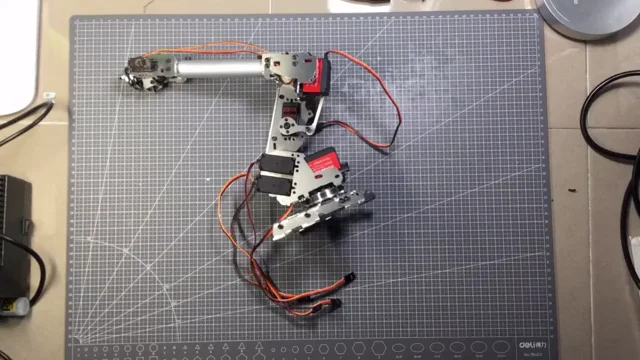
Translate image tones into toolpaths and paint with a robot-mounted sponge.
- 03
Intervene
Change the painted image by hand, introducing new marks and representations.
- 04
Reintroduce
Feed the altered image back into generation and compare the resulting portraits.
Inverse Portrait: gender, leadership, and identity
In the student project Inverse Portrait, the prompt “successful leader” produced a male figure in a business suit. Students intervened in the physical painting to introduce a female representation, then returned the altered image to the generation process. Their boards connect this experiment to a wider vocabulary of “successful,” “smart,” “brilliant,” and “entrepreneur,” showing how apparently neutral descriptions can acquire gendered visual form.
The project uses “script” in two connected senses: the computational instructions that generate and paint an image, and the social expectations that shape its interpretation. Successive layers of generated portraits, robotic dots, and hand-painted strokes make those scripts visible and open to revision.
Prompt, representation, and feedback
Text-to-image trials and concept mapping are paired with the feedback sequence linking Stable Diffusion, ControlNet, Grasshopper toolpaths, robotic painting, and hand drawing.
From image to physical mark
Students developed a custom end-effector holder for a beauty sponge and tested how contact depth changes dot size and repeated contact changes the painted shade. Makeup brushes provided a second way to work across the same surface. Tool selection connected the project’s questions about identity to the material techniques used to construct a portrait.
Rhino and Grasshopper translated image information into drawing points and robot movements. The documented trials compare a regular grid and zigzag sequence, grayscale-dependent dot sizes, and brightness-based point generation with a nearest-neighbor sequence. Paint-dipping positions, approach points, and contact depth made image translation a problem of tool behavior and motion planning as well as representation.
Drawing tools and toolpath studies
Sponge-holder design, contact tests, and on-site fabrication accompany studies of point spacing, dot size, path order, and painting depth.
Manual intervention as feedback
The robot deposits discrete marks according to a programmed sequence; participants overlay and connect those marks with a brush. Returning the altered painting to image generation makes the physical work an input to the next portrait. The exercise gives students a concrete way to examine how a prompt, an image-conditioning input, a toolpath, and a hand-painted decision each affect representation.
Robot-applied sponge marks and manual brushwork on the same painted surface.