Thermal images, transition tests, printed components, and a wall prototype show specimen-scale response, without establishing whole-building energy performance. View evidence ↓
Thermal imaging
Exterior and interior observations of the wall prototype under the illustrated test conditions.
Wall prototype and components
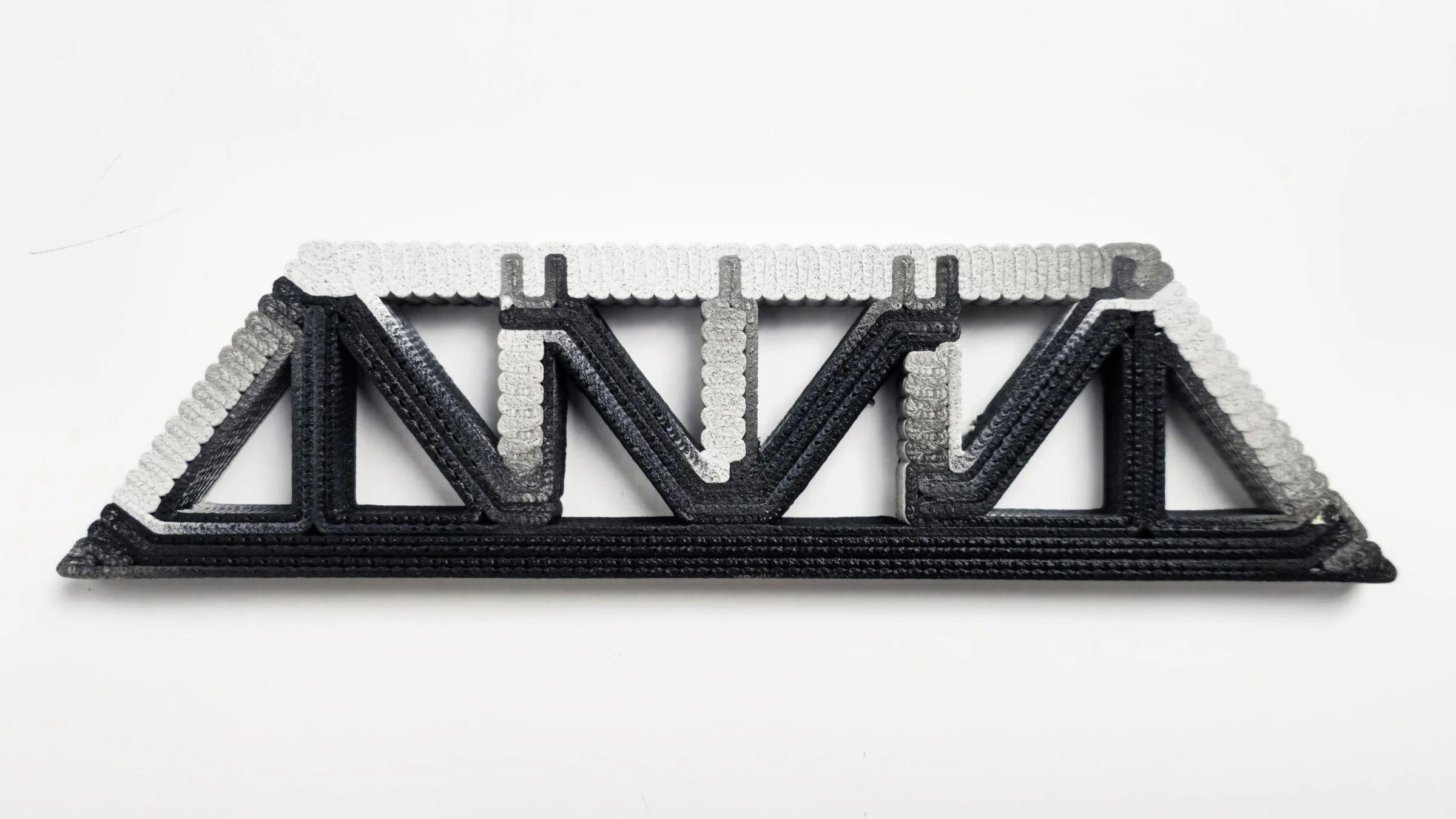
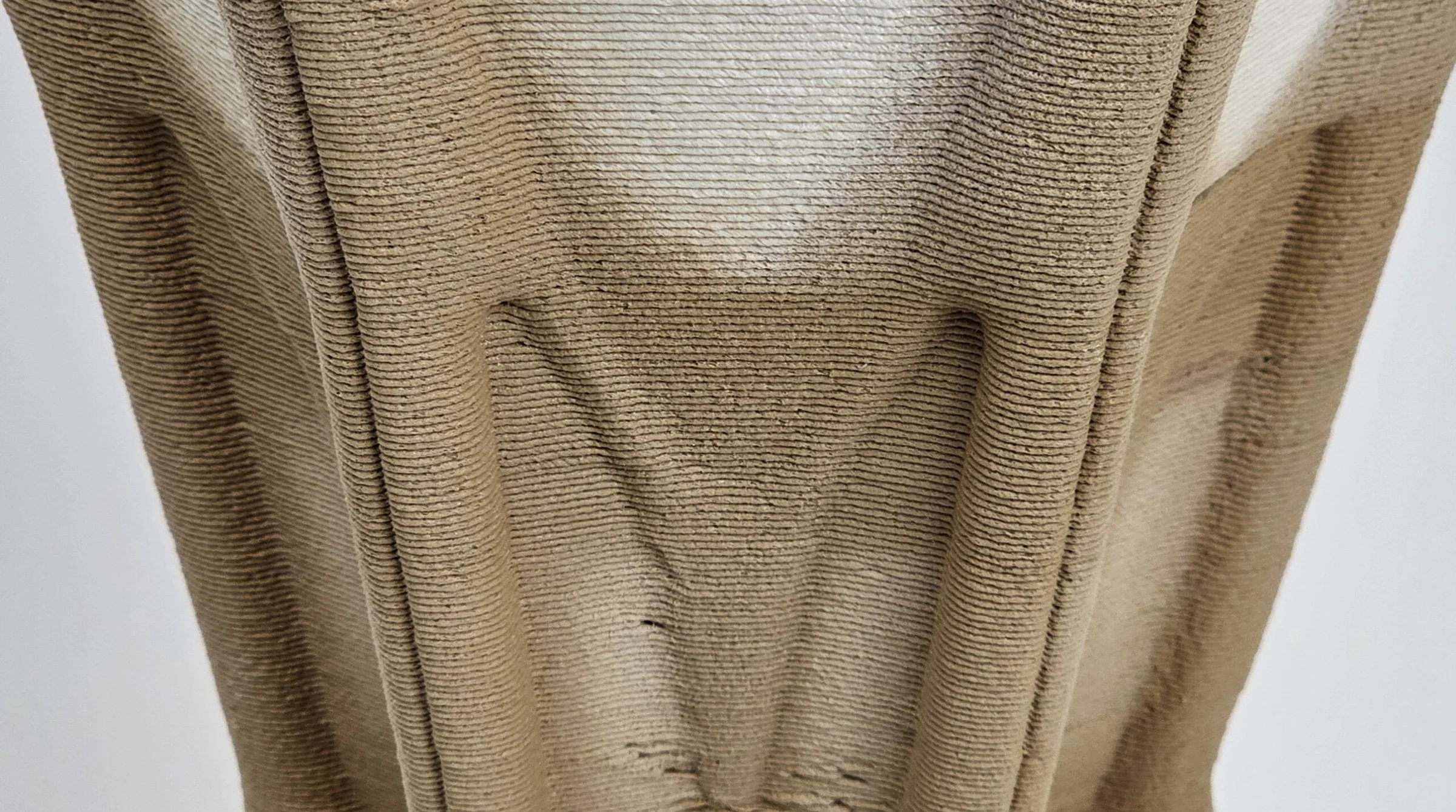
Printed layer organization, structural ribs, and individual masonry components.
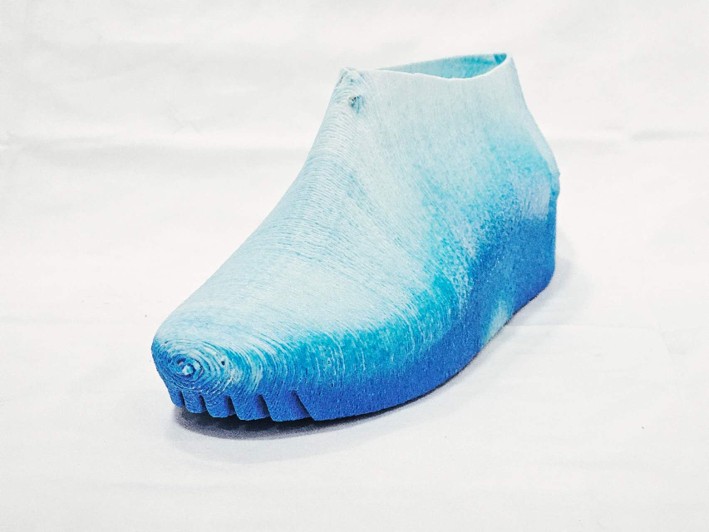
This research integrates load-bearing capacity and thermal insulation within the material distribution of printed architectural components. A single-nozzle process changes the mixture during fabrication, creating continuous transitions between regions with different structural and thermal demands.
The experiments investigate paste-based mixtures containing clay and diatomaceous earth, alongside reinforced and foaming polymer filaments. Print-quality tests examine material transitions, while thermal imaging compares the response of samples with different compositions.
A wall prototype places reinforced material along regions of higher stress and insulating material in lower-stress areas. Its geometry, material map, and printing sequence are coordinated so that the thermal and structural functions are organized within each masonry unit.
The work received the Best Paper Runner-Up Award at ACADIA 2024.
Method
The method coordinates geometry, a spatial material map, and the printing sequence so that load-bearing and insulating regions can be organized within a masonry component.
- 01
Locate demand
Relate force-informed geometry to structural and thermal requirements.
- 02
Assign composition
Place reinforced and insulating material in regions with different demands.
- 03
Print
Coordinate material transitions with the geometry and deposition path.
- 04
Evaluate
Examine print quality and compare thermal responses under the illustrated test conditions.
Gradient insulation demonstration
Material placement and thermal-performance studies.
Geometry and material placement
Force-informed wall geometry and composition studies using clay and diatomaceous earth.
Additional experiments and design studies
Evidence & scope
Material-transition tests, printed components, thermal images, and a wall prototype document the investigation. Thermal images describe the observed response under the shown conditions; they are not a whole-building energy evaluation. The paper received the ACADIA 2024 Best Paper Runner-Up Award.
Related publications
All publications →-
Functionally Graded Architectural Materials: Integrated and Tailored Thermal Insulation through Gradient Multimaterial Additive Manufacturing for Masonry Architectural Components
Designing Change [Proceedings of the 44th Annual Conference of the Association for Computer Aided Design in Architecture (ACADIA)] · 2024