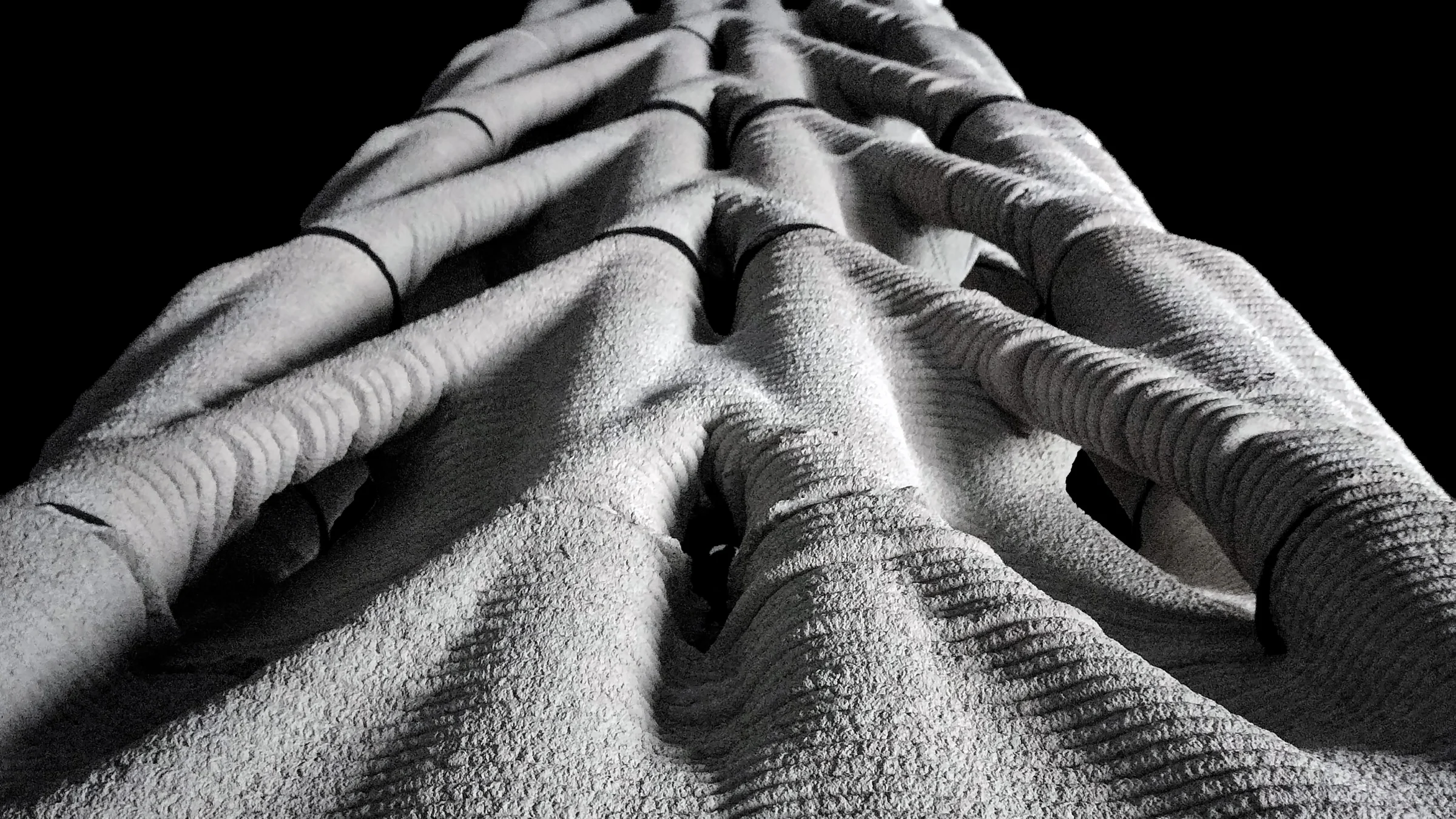
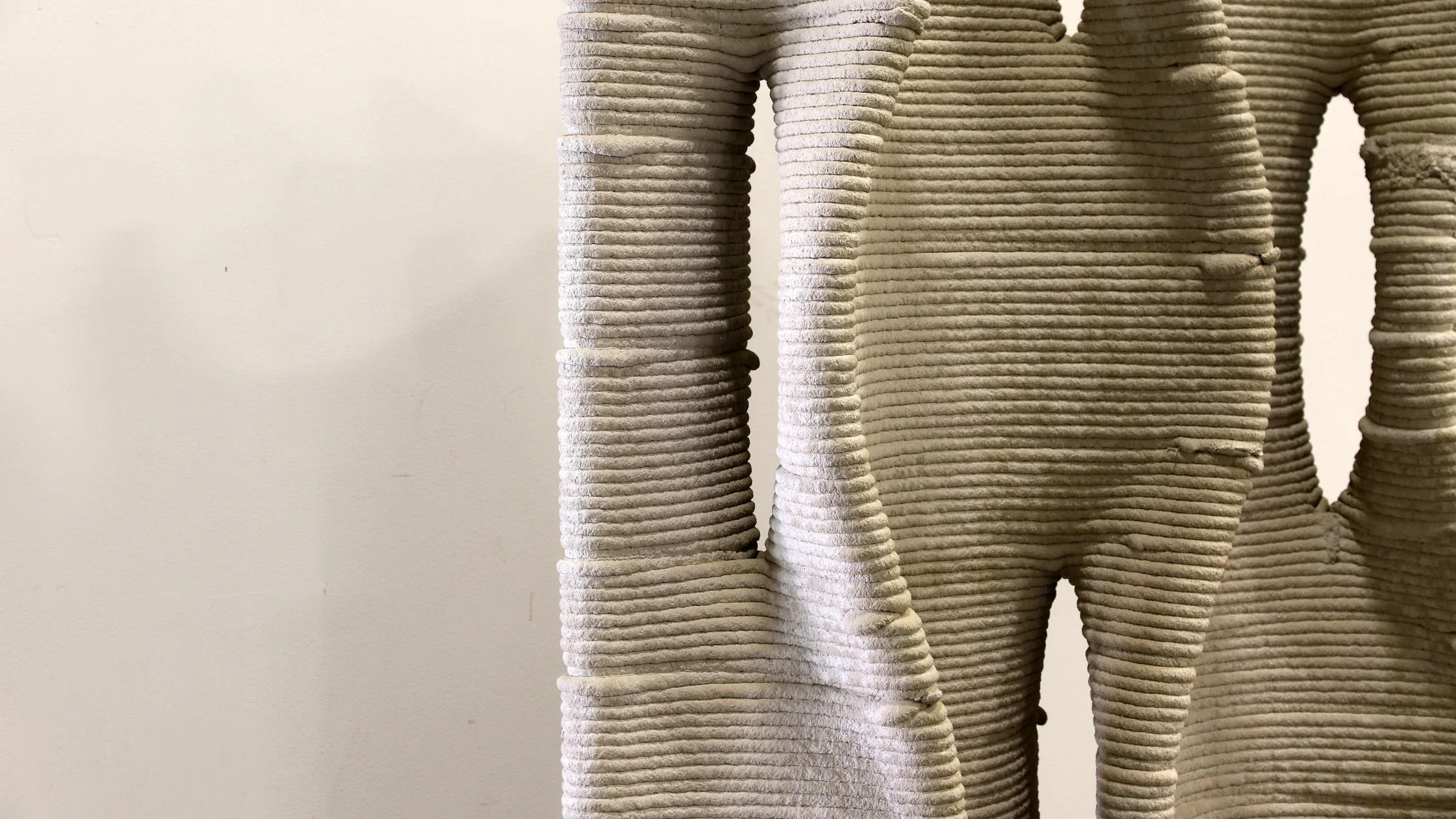
Material specimens, carbon-uptake comparisons, and the 2025 Advanced Functional Materials paper; related structural prototypes are shown separately. View evidence ↓
This research combines a biomineral-infused concrete mixture with 3D-printed surface geometry to increase carbon capture and storage. Porous silica biominerals replace part of the cement, reducing the mixture’s cement demand while supporting carbonation.
Triply periodic minimal surface geometries increase the exposed surface area of printed specimens. The material formulation and geometric organization are studied together so that carbon uptake, printability, and mechanical performance can be evaluated within the same fabrication approach.
The broader building-system research connects these material studies to prefabricated, post-tensioned floor components. The images below document the material samples, printed geometries, and carbon-uptake comparisons used in that investigation.
The associated collaborative paper, 3D Concrete Printing of Triply Periodic Minimum Surfaces for Enhanced Carbon Capture and Storage, was published in Advanced Functional Materials in 2025.
Material samples and carbon uptake
Printed specimen geometry, mixture comparisons, and carbon-uptake measurements.
Related structural prototypes
Fabrication studies from the wider collaborative building-system project.
Related publications
All publications →-
3D Concrete Printing of Triply Periodic Minimum Surfaces for Enhanced Carbon Capture and Storage
Advanced Functional Materials · 2025