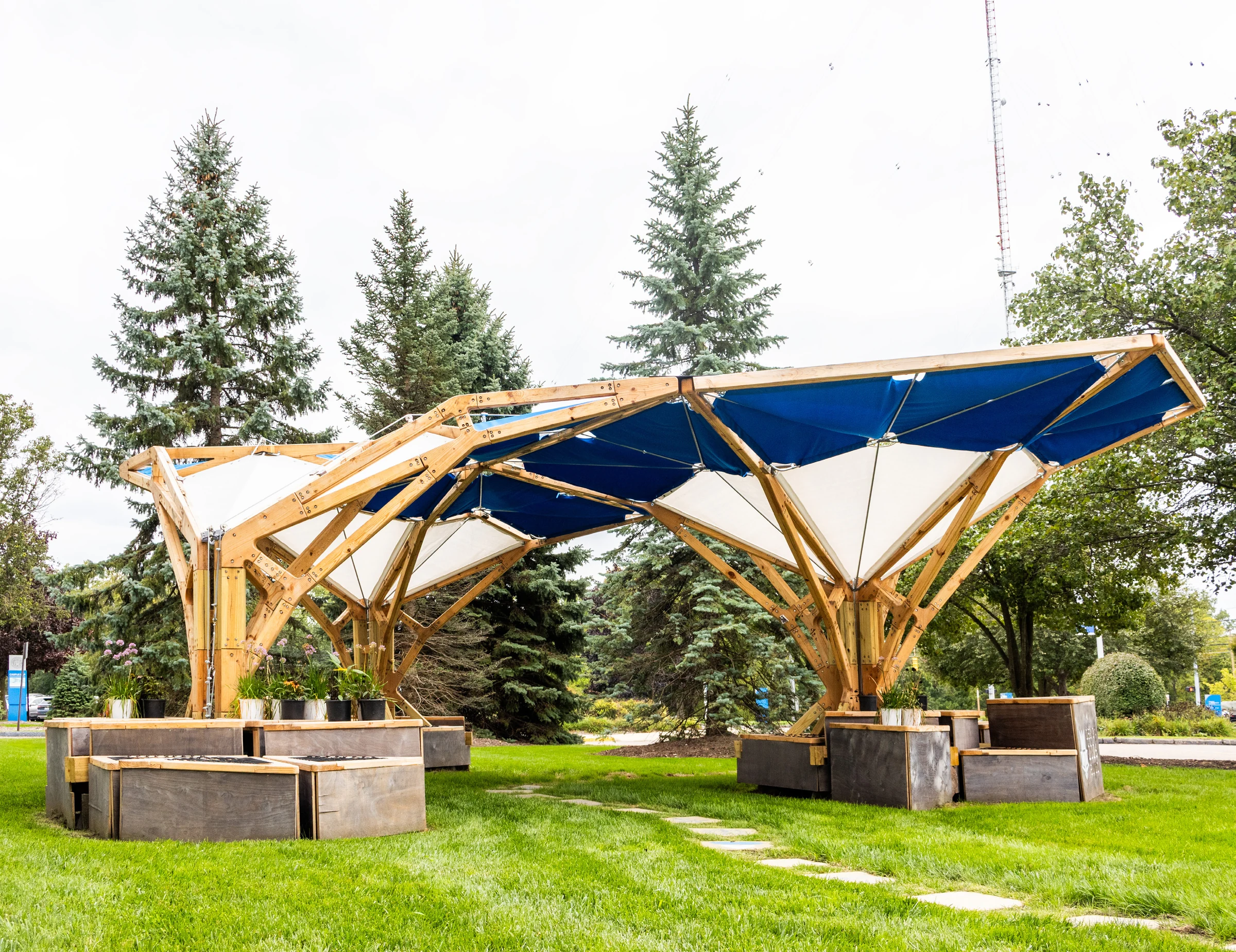
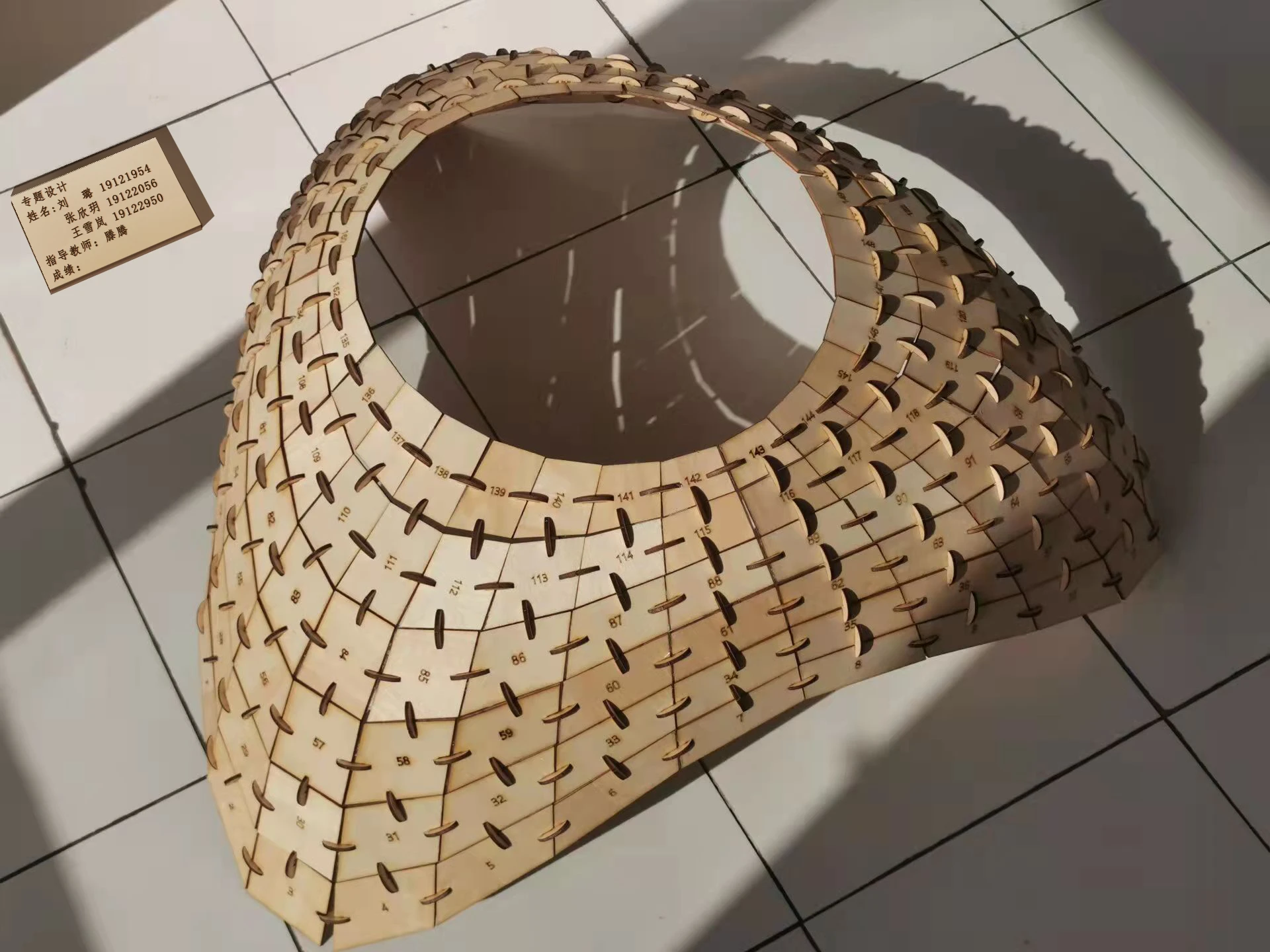
Three full-scale student pavilions, documented in construction and exhibition photographs, were acquired by the Shanghai Museum of Trade. View evidence ↓
I initiated Digital Practice in 2016 as a collaboration between the University of Washington’s Department of Architecture and the Shanghai Institute of Visual Art. The ten-day summer workshop took place on the SIVA campus, with collaborating faculty Brian R. Johnson, Kimo Griggs, and Weida Huang.
The teaching focused on design communication as well as design generation: how teams carry information from a shared digital model through fabrication and assembly. Case studies in Shanghai connected students’ spatial ideas to questions of use, material, and construction.
Teams developed and built three full-scale pavilions. The Shanghai Museum of Trade subsequently acquired all three for public display.
Three full-scale pavilions
The built pavilions explore different spatial arrangements through digitally coordinated timber components.
Design information as a shared resource
Students worked in teams to develop geometry, exchange design information, prepare components, and coordinate assembly. Model reviews and full-scale making created a feedback loop between design intent, tools, material behavior, and collective construction.
Prototypes, reviews, and assembly
Small models, joint studies, group discussions, and assembly sessions connect digital decisions to the built structures.
Workshop film
Digital Practice: design, fabrication, and construction at SIVA.