Fabric-fitter and hybrid-frame prototypes demonstrate folding, fit, and assembly; the page makes no claim of certified protective performance. View evidence ↓
OPERATION PPE’s 2D-to-3D face-mask project is a printed fabric fitter developed by the Sabin Lab at Cornell University. Its flat, patterned components bend into a three-dimensional support for fabric face coverings. I contributed as a member of the project’s design team.
From a flat print to double curvature
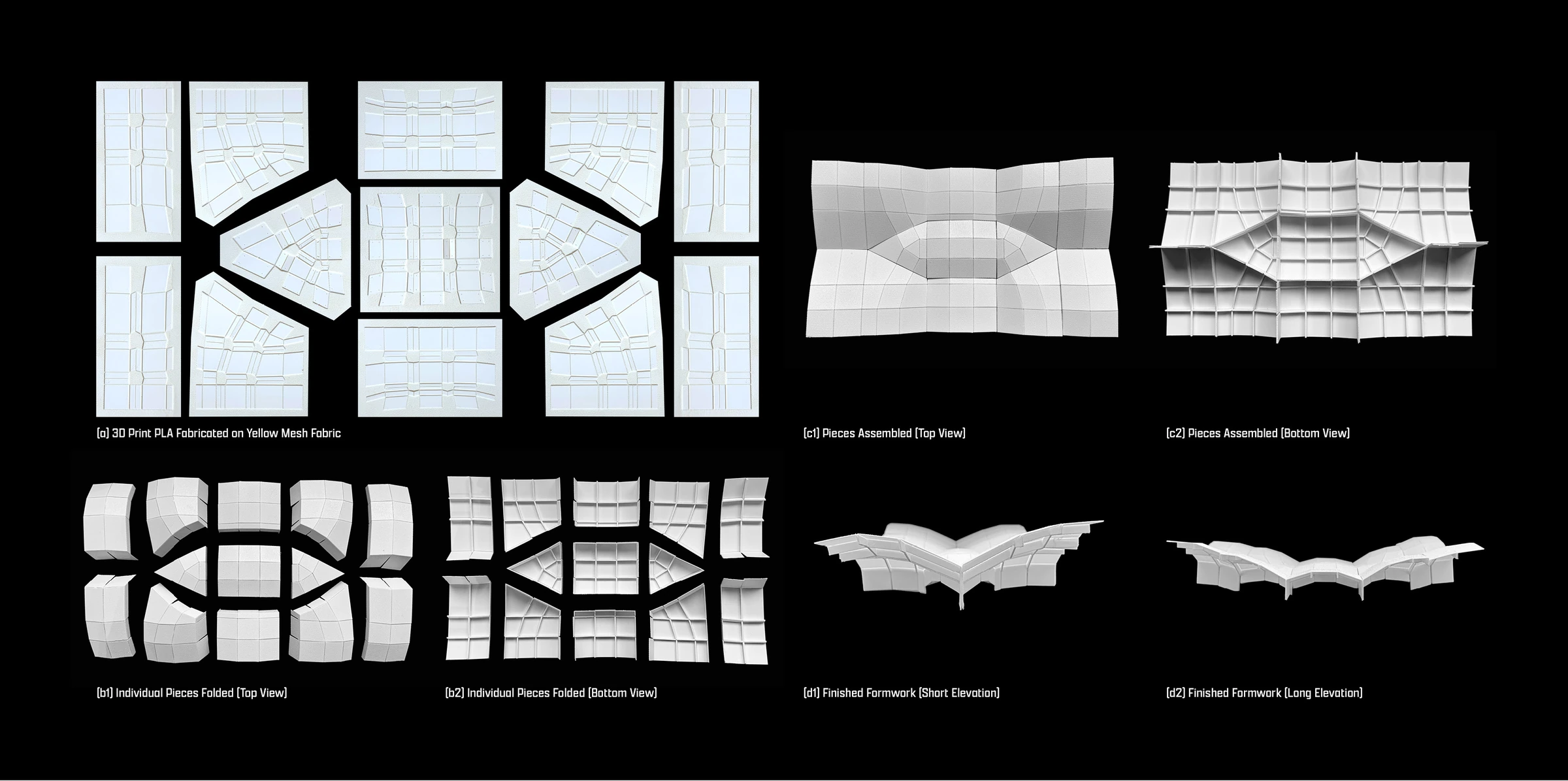
Repeated cuts create flexible living hinges within the printed pattern. Their local bending allows the frame to wrap into a compound curve around the face. The printed geometry supports a separate fabric layer, so the frame and covering can be developed as distinct parts.
Fabric-fitter prototypes
Front and three-quarter views document printed supports combined with different fabric coverings.
Parts, fit, and assembly
The design is divided into parts that snap together to fit the working area of a standard desktop printer. The hybrid version combines a more open upper framework with a flexible lower perimeter, testing how the printed pattern can accommodate the shape of the face.
Hybrid frame
Forming around the face
Distributed fabrication
The prototype was developed within Operation PPE, the Sabin Lab initiative launched in March 2020 in response to pandemic equipment shortages. Its use of desktop printing and assembled parts connected product design to a distributed network of makers. The fabric-fitter design received third place in the Museum of Craft and Design’s 2020 Let’s Face It competition.