Research2022–2023
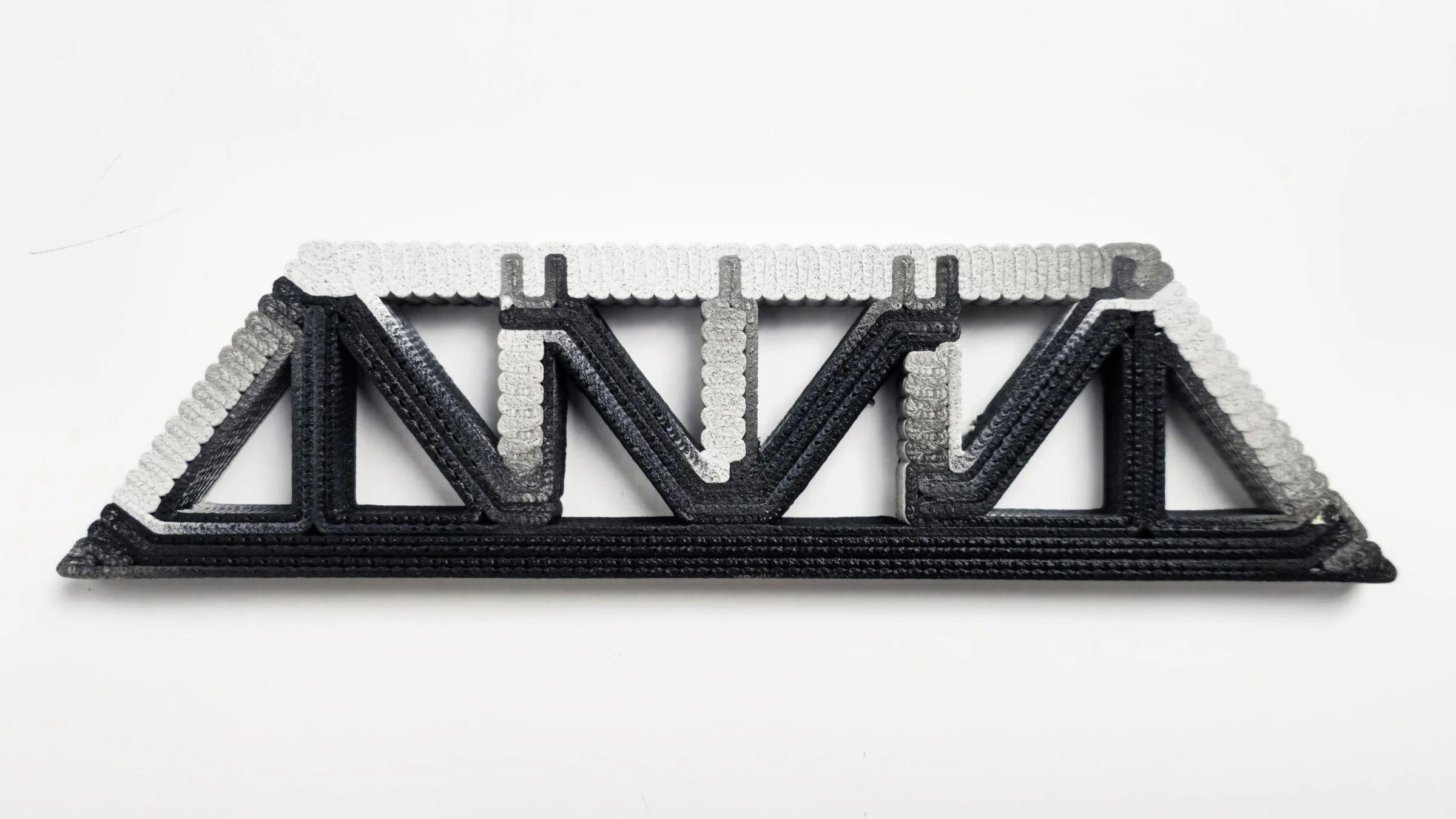
Multi-material 3D Printing for Tension-Compression Structure
Provides the structural-printing research behind force-informed material placement.
2026
A computational design tool translates structural force patterns into continuous printing paths and spatial material assignments.
Use the default Howe · 10 panels model. In Design, click the central downward load arrow (node 16), then choose Up in its Direction controls.
Open Analyze. Compare tension, compression, and Peak movement. Switch the same load between Down and Up to see the difference.
Open Toolpath and keep Axial + bending stress. After generation finishes, compare member fill and tensile runs at the central joints. Return to Design to repeat.
Keep geometry and other settings unchanged. Path continuity is a geometric check; the prototype does not verify printed joint strength.
For more workspace, especially on a phone, open StressPath full screen ↗.
StressPath is an interactive research tool that explores how structural behavior can inform continuous printing paths and material distribution. Developed as an extension of my work on multi-material printing for tension-compression structures, the project brings structural modeling, analysis, toolpath generation, and material planning into a shared browser-based environment. It makes the relationship between force, geometry, and fabrication visible and available for direct experimentation.
The project is organized around a central question: how can the way a structure carries forces guide the way it is made? Editable frame models connect geometry, supports, and applied loads to visualizations of tension, compression, bending, shear, and deformation. These representations provide a basis for comparing structural arrangements and understanding how local changes affect the behavior of the whole. Planar studies form the core workflow, with an experimental assembly workspace extending the investigation to printable modules arranged in three dimensions.
Toolpath generation translates the analyzed member response into connected deposition paths. Bead width, spacing, member junctions, and layer staggering are treated as design variables, allowing structural intent to be considered alongside the continuity and sequence of printing. The resulting paths can be examined in plan or as layered assemblies, linking the abstract frame model to the geometry of deposited material.
Material planning adds another level of control to this relationship. Four feed materials can be assigned individually or combined as percentage-based mixtures within selected regions. Gradients are defined by distance along the ordered toolpath, so a transition follows the motion of the nozzle. A continuous-width preview makes these changes legible across the printed geometry. The intended distribution is considered separately from the printer’s mixing response: adjustable delay and mixing-length parameters support studies of how deposition may differ from the design and how advancing material commands may compensate for that response.
StressPath’s contribution is a shared workspace for examining these decisions together, from structural behavior to fabrication instructions. Geometry exchange, G-code export, and portable project files connect interactive studies to further modeling and printing workflows. The current prototype treats structural analysis and material planning as distinct stages: material recipes guide deposition, while the frame analysis retains its assigned section and elastic properties. The embedded tool above presents this ongoing research as an interactive study environment.
Research foundation
Proceedings of IASS 2023 symposium Integration of Design and Fabrication · 2023
Research foundation
Materials & Design · 2025
Research2022–2023
Provides the structural-printing research behind force-informed material placement.
Research2026
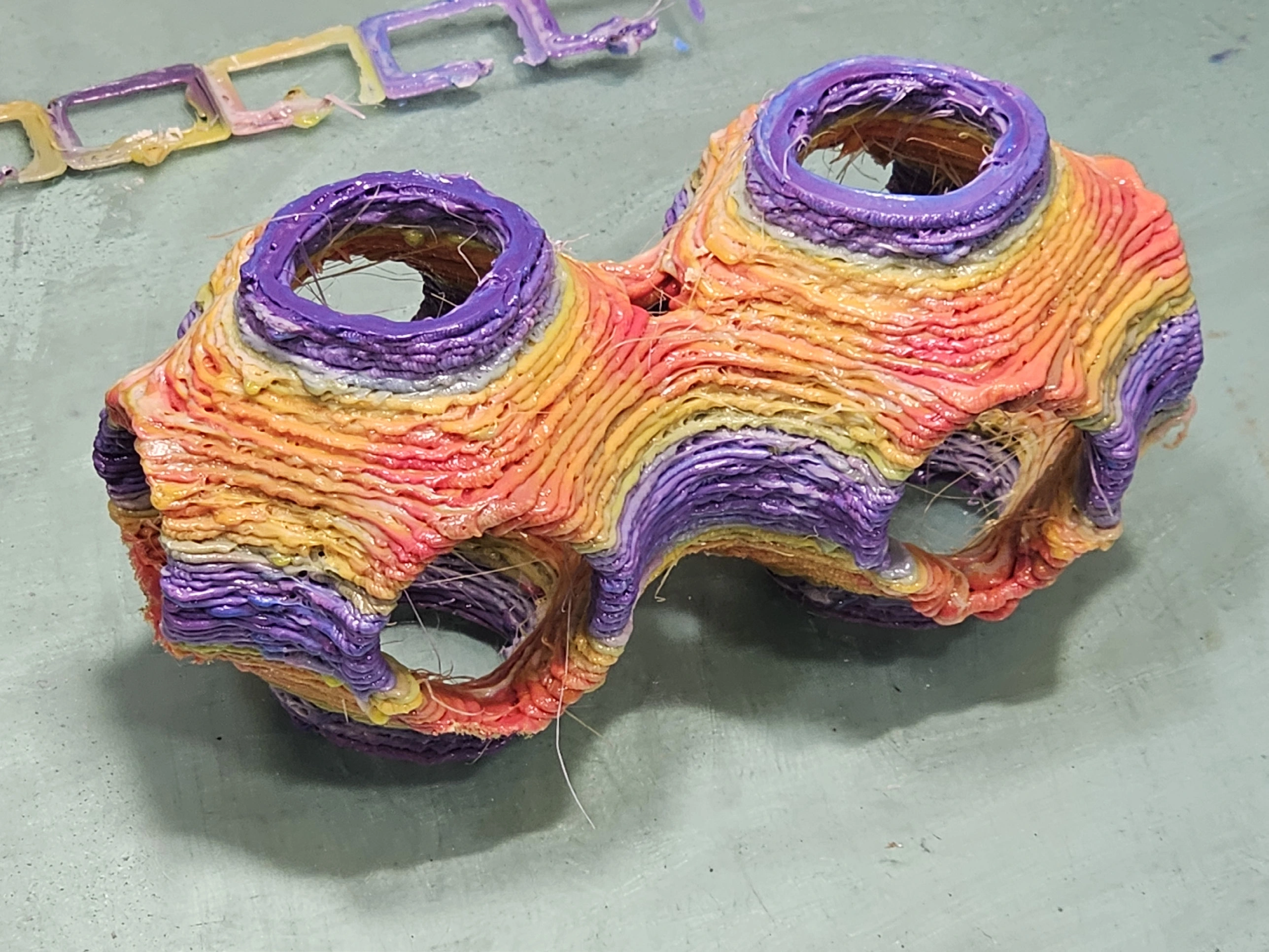
Addresses continuity and transition control in material-aware printing.
Teaching2026
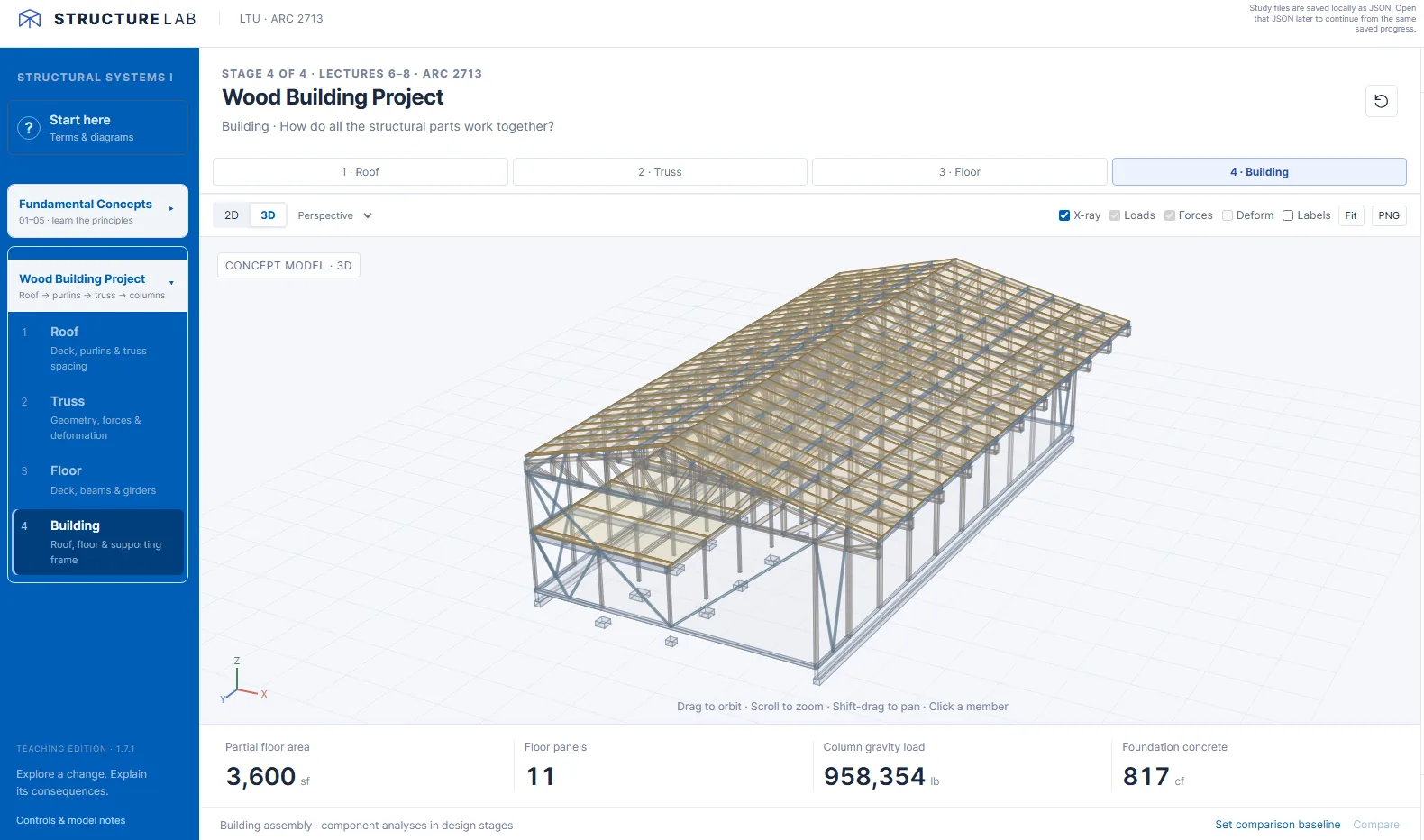
Uses visible force behavior to support architectural design reasoning.